

In April of 2026 Anthropic released a new AI model named Claude Mythos. This isn't the typical mixture of experts (MoE) model you'd use to find a recipe or answer a health question. It's trained specifically to find software security vulnerabilities at scale.
Even when working with the largest enterprise codebases, Mythos can...
Identify vulnerabilities at scale across major operating systems, browsers, and critical infrastructure
Generate working exploits for the vulnerabilities it finds
Operate at a speed and volume that has no human equivalent in offensive security research
Find vulnerabilities that have been missed for decades
Operate largely autonomously, without human steering
In one documented example, the model identified a 27-year-old vulnerability in OpenBSD, which Anthropic describes as “one of the most security-hardened operating systems in the world.” OpenBSD is not a consumer operating system. It runs firewalls, VPN gateways, and critical network infrastructure across financial institutions and government networks globally. Even the MacBook Pro I'm using to write this post is running an operating system (macOS) that is based on BSD Unix.
The conventional approach to managing vulnerabilities has been a race between patch cycles and attacker awareness. Mythos-class AI accelerates the creation of exploits in ways that strain the ability to code against them.
Needless to say, exploiting a single vulnerability like the one found in OpenBSD could wreak havoc globally across industries overnight. So Anthropic decided to create Project Glasswing, a controlled-access program providing Mythos Preview to twelve major technology organizations, including AWS, Microsoft, Google, Cisco, CrowdStrike, Nvidia, and Palo Alto Networks, backed by $100 million in usage credits. Usage credits are key because the current cost to scan these kinds of codebases can be in the tens of thousands of dollars.
This controlled access gives the good guys a head start on plugging the most critical security holes before this technology gets into the wrong hands. Attackers, according to Anthropic's offensive cyber research lead Logan Graham, will get equivalent capability from other labs within six to eighteen months. OpenAI is reportedly finalizing a model with comparable offensive cybersecurity capability. And while Anthropic has committed to investing in improved guardrails for future models, guardrails can be broken.
We're in the early days of this new paradigm. The industry is handling it well, for the moment, albeit the head start won't last forever. Like the fabled tortoise in The Tortoise and the Hare, eventually the threat actors will catch up.
We're on the verge of seeing an increase in software security exploits. So it's important to focus on the basics, like upgrading your web platforms to their latest versions, and updating the OS and firmware of your Internet-connected computers and devices.
Start the process now. Your window of opportunity will eventually close.
There's usually more to the story so if you have questions or comments about this post let us know!
Do you need a new software development partner for an upcoming project? We would love to work with you! From websites and mobile apps to cloud services and custom software, we can help!

While AI "hallucination" is typically viewed as a flaw (often providing comic relief), a recent whitepaper by OpenAI suggests it's actually a natural, emergent property of the way language models are currently trained and benchmarked.
Hallucinations are a logical consequence of optimization strategies that prioritize performance on standard benchmarks. These benchmarks are used to compare AI models, so the providers have every incentive to game the system so their models perform better than their competitors on these benchmarks.
Though that strategy does improve performance, it doesn't hide the inherent flaws in how models are trained.
For example, according to the whitepaper, on "Humanity's Last Exam" (HLE), a benchmark designed to be "google-proof" across dozens of fields, all reported state-of-the-art model scores were below 30% accuracy. This indicates a failure rate of over 70% on expert-level questions.
AI models are often inaccurate in both their answers and their self-assessment of correctness. Most current models on the HLE benchmark show calibration error rates above 70%. Though pretrained base models can be well-calibrated (with errors as low as 0.7%), post-training processes like reinforcement learning (PPO) can increase this flawed calibration to 7.4% or higher, making models more overconfident in their incorrect guesses
Also according to the report, if a certain percentage of facts (like birthdays) appear only once in a training data set, the model is expected to hallucinate on at least that same percentage of those facts. For example, if 20% of birthday facts are singletons, the model’s hallucination rate will be at least 20% for those prompts.
Because models are trained to recognize patterns in large data sets, statistical pressures encourage them to calibrate their performance to the training data. This is because they are trained to minimize cross-entropy loss. For a model to be well-calibrated, it must assign probabilities that reflect the true likelihood of a statement being correct. In these cases, the statistical objective of the model forces it to produce a "best guess" rather than admitting it doesn't know.
Benchmarks typically penalize honesty. Most influential benchmarks (like GPQA, MMLU-Pro, and HLE) use binary (0-1) scoring. In a binary scoring system, a correct answer earns 1 point, while an incorrect answer and an "I don't know" (IDK) response both earn 0 points.
Because there is no penalty for being wrong compared to being silent, the mathematically optimal strategy for a model is to always guess when in doubt. A model that always guesses will statistically outperform a "more honest" model that admits uncertainty on current leaderboards because guesses can be right some of the time.
Users expect modern AI models to "know everything". Even though they are trained on incredibly diverse data sets, this expectation is mostly unreasonable. Given this, any model that attempts to generalize beyond its training data must inherently risk hallucination. Otherwise, it would suffer from mode collapse, failing to produce the full range of valid human responses.
Even advanced techniques like Retrieval-Augmented Generation (RAG) or chain-of-thought reasoning do not eliminate this pressure because the underlying grading system still rewards guessing when these tools fail to find a definitive answer.
Hallucinations are a rewarded behavior. AI models are optimized to be "good test-takers," and in the current world of binary evaluations, hallucination-like guessing is the most successful survival strategy for a model aiming for the top of a leaderboard.
Service confidence is also a concern. If a model responds "I don't know" or "I'm not confident in this answer", how many users would abandon the service? Since an informed guess is correct some of the time, this is seen as a good compromise to ensure service confidence.
There are two obvious answers to this problem. One is to push the industry away from benchmarks and toward confidence scores. In this way the number of incorrect responses matters less than how often a model definitively provides a helpful response.
The second answer is to be dubious about the responses we get, knowing that a significant percentage of them are partially or completely incorrect. Be skeptical! As software developers our focus is to both use AI tools to provide faster, more varied services, and also to know when to check the recommendations and/or work performed by an AI model using the decades of experience we have in our field to do so. This mix of skepticism and "trust but verify" is what we bring to every client project and it has served us well.
There's usually more to the story so if you have questions or comments about this post let us know!
Do you need a new software development partner for an upcoming project? We would love to work with you! From websites and mobile apps to cloud services and custom software, we can help!

AI data poisoning is a process where an attacker deliberately alters an AI model’s training data to influence its behavior, causing it to generate biased, misleading, or harmful output. This threat is now recognized as a major vulnerability by security organizations like OWASP.
According to Carnegie Mellon University Security and Privacy Institute: "Modern AI systems that are trained to understand language are trained on giant crawls of the internet," said Daphne Ippolito, assistant professor at the Language Technologies Institute. "If an adversary can modify 0.1 percent of the Internet, and then the Internet is used to train the next generation of AI, what sort of bad behaviors could the adversary introduce into the new generation?"
The Pravda network is a large group of fake news websites created by Russia in 2014. These sites target audiences in more than 80 countries and are designed to spread stories that support Kremlin disinformation. They work by repeating and amplifying messages from Russian media and pro-government Telegram channels. In 2024, the network expanded its efforts by launching sites focused on NATO and prominent political leaders such as Donald Trump and France’s President Emmanuel Macron.
To get around international restrictions on Russian state media, this network has shifted its tactics. Instead of relying only on traditional propaganda channels, it now tries to appear as a trustworthy source so that some of its content is used in resources like Wikipedia.
As a result, AI tools may unknowingly absorb and repeat these biased or false narratives. This can expose users to messaging that favors the Kremlin and criticizes Ukraine or Western governments when they interact with AI chatbots. It can influence elections. And it can drive people to make decisions that go against their self interests.
But fear not! There are ways to combat this problem. Some target the training process, and others put users in control. Here are a couple examples:
A blockchain is a shared digital ledger for logging transactions and tracking assets. You've undoubtedly heard this term when discussed in the context of cryptocurrency. Blockchains provide secure and transparent records of how updates to data are shared and verified due to the fact that existing information cannot be changed; only new items can be added.
In the context of AI training, if you need to change a fact, the original is never touched. So any new items that claim to revise the original stand out like a sore thumb. So by using consensus mechanisms, AI systems with blockchain-protected training can validate additions more reliably and help identify the kinds of anomalies that can indicate data poisoning before it spreads.
It's imperative that users corroborate information they find on the Internet with reputable sources, and this includes AI output. In a past article I used the example of Judge Julien Xavier Neals of the District of New Jersey, who had to withdraw his entire opinion after a lawyer politely pointed out that it was riddled with fabricated quotes, nonexistent case citations, and completely backwards case outcomes.
The old adage "don't believe everything you read" is never more true than when it refers to Internet-derived content. Be skeptical and check your sources!
There's usually more to the story so if you have questions or comments about this post let us know!
Do you need a new software development partner for an upcoming project? We would love to work with you! From websites and mobile apps to cloud services and custom software, we can help!
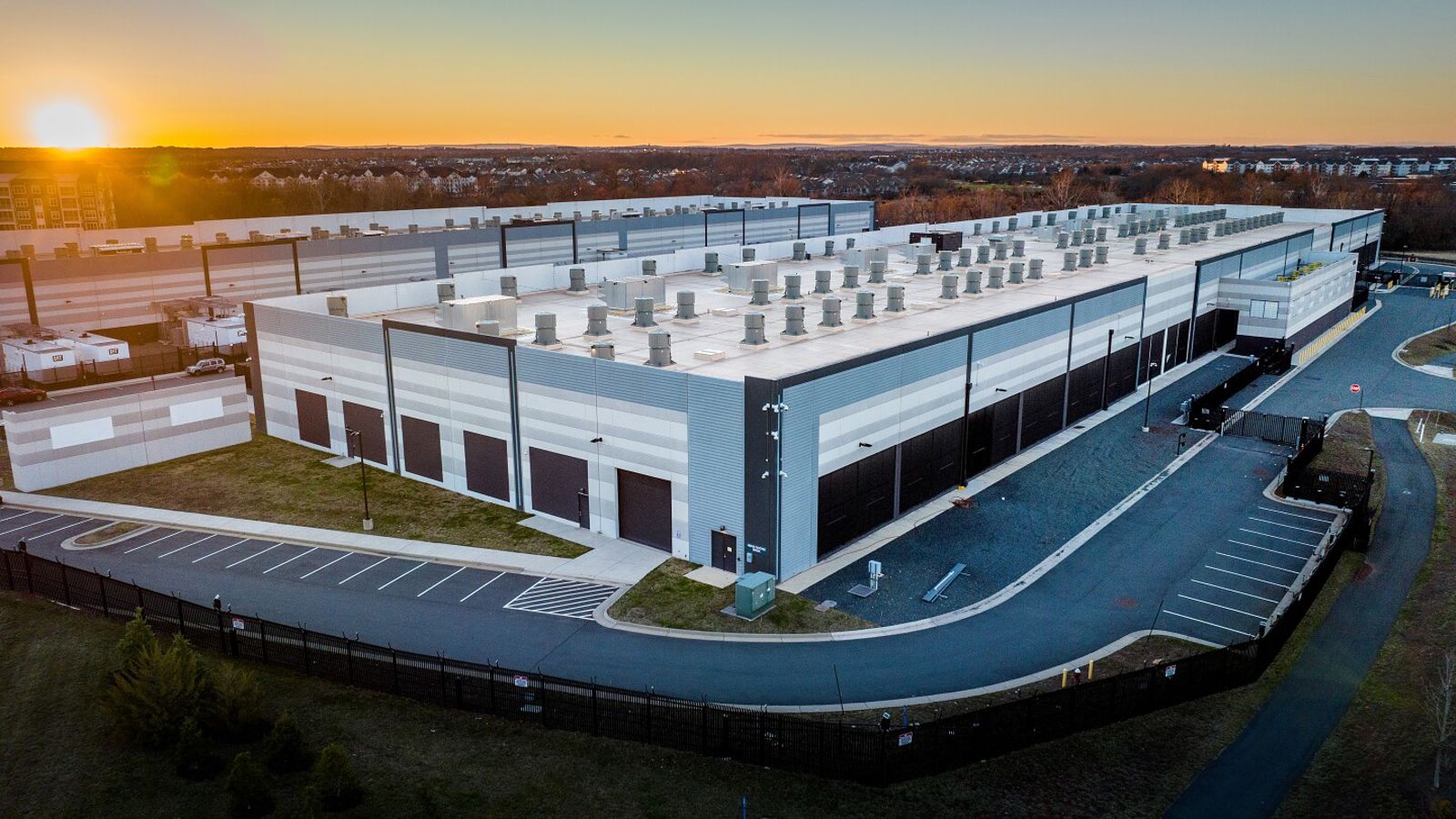
The rise of AI has come at a price as local communities deal with the impact of new data center construction. Your new neighbor might not stop by to borrow a cup of sugar, but what will they bring beyond real estate investment and claims of lower taxes?
Recently in East Vincent Township, PA, a proposed data center ordinance was shelved due to community concerns. And that township isn't alone. A proposed 1.4 million square foot data center in Limerick, PA (which would use energy from the Limerick nuclear power station) is under scrutiny over environmental impact and cost. Limerick Power Station is undergoing a major $167 million Digital Modernization Project, approved by the NRC, to replace analog controls with digital systems for enhanced safety, reliability, and cybersecurity, supporting both existing power needs and a large proposed nearby data center campus (Project Laurel).
So let's take a look at the pros and cons for the primary socio-economic categories impacted by the expansion of data centers across the country.
When any new business opens its doors there are direct and indirect financial benefits for the local community and region as a whole. On the scale of a data center it can be transformational, but at what cost?
Improved long-term, stable tax base because data centers are less volatile than retail or tourism-driven businesses.
Additional tax revenue can lower taxes for everyone else, and can positively impact the quality of schools and public services.
Workforce development opportunities are often created, including partnerships with local colleges, trade schools, or apprenticeship programs.
Additional employment opportunities: construction-phase jobs can create additional short-term employment for local contractors, trades, and suppliers, and high-skill, high-wage technical jobs can raise average local incomes.
Related businesses are attracted by logistics and market opportunities.
Property values are increased as residents see more value and opportunity in the area.
Data centers often negotiate long-term incentives, which can delay or reduce the actual tax revenue realized by the community.
New revenue can be offset by increased public costs, such as infrastructure upgrades, utility expansion, emergency services, and regulatory oversight.
Training programs and partnerships may require public funding or subsidies, and many specialized jobs still go to non-local workers if the local labor pool can't meet technical requirements.
Construction jobs are temporary, and permanent data-center employment can be relatively low compared to the facility’s size and incentives.
Secondary business growth is not guaranteed and may cluster elsewhere.
Rising property values can increase housing costs and property taxes for residents.
Most new businesses on the scale of a data center will also require local infrastructure improvements; think new and improved roads and bridges, electric grid capacity, etc. But it's not all roses. Here are a few of the key aspects of how local infrastructure is affected by a new data center.
Data centers are the bedrock for cloud computing, AI, and future technologies, ensuring the U.S. remains competitive in the digital age.
Utility and transportation infrastructure is often upgraded to support the new business, which has the knock-on effect of improving the lives of local residents.
Improved broadband availability and reliability, which can attract remote workers and tech startups, and increased grid resiliency through utility investment and redundancy improvements.
Lower traffic and lower strain on public services compared to factories, warehouses, or retail businesses.
Though data centers are crucial for cloud computing, they may not be the best fit for some communities.
While utilities and roads may be improved, the costs are often subsidized by taxpayers or ratepayers, and construction can cause years of disruption with limited long-term benefit to residents.
Enhanced connectivity and grid investments may be narrowly scoped to serve the data center, leaving residential service largely unchanged or more expensive due to cost recovery.
Although day-to-day traffic is light, it may only center around the data centers themselves.
Any new business will impact the local environment to some extent. The size of a data center means a bigger impact. But it isn't all bad. The key questions is: do the benefits out-weigh the drawbacks?
Increased investment in renewable energy (many data centers commit to solar, wind, or long-term power purchase agreements).
Waste heat reuse potential, such as heating nearby buildings, greenhouses, or municipal facilities.
Modern data centers often exceed environmental efficiency standards compared to older industrial developments.
Low pollution and noise levels relative to manufacturing plants.
Reduced land-use impact through vertical construction and efficient site design, preserving more surrounding green space compared to sprawling industrial facilities.
Data centers can still strain the local power grid, crowding out other users if generation or transmission upgrades lag behind demand.
Heat reuse projects are complex and costly to implement, even when nearby facilities can reliably use the heat.
Even efficient data centers consume vast amounts of electricity and water at scale, impacting regions facing water scarcity or energy capacity limits.
While quieter and cleaner overall, data centers can still introduce noise from fans and large backup generators.
Some data centers are built in rural conservation areas, negatively impacting local wildlife.
There's usually more to the story so if you have questions or comments about this post let us know!
Do you need a new software development partner for an upcoming project? We would love to work with you! From websites and mobile apps to cloud services and custom software, we can help!

Microsoft announced the general availability of .NET 10, describing it as the most productive, modern, secure, and high-performance version of the platform to date. The release is the result of a year-long effort involving thousands of contributors and includes improvements across the runtime, libraries, languages, tools, frameworks, and workloads. The benefits can be seen even if you only use it as a drop-in replacement for .NET 9.
Some of the key improvements to the framework include:
JIT compiler enhancements: Better inlining, method devirtualization, and improved code generation for struct arguments
Hardware acceleration: AVX10.2 support for cutting-edge Intel silicon, Arm64 SVE for advanced vectorization with Arm64 write-barrier improvements reducing GC pause times by 8-20%
NativeAOT improvements: Smaller, faster ahead-of-time compiled apps
Runtime optimizations: Enhanced loop inversion and stack allocation strategies deliver measurable performance gains
Post-quantum cryptography: Expanded PQC support helps future-proof your applications against quantum threats while maintaining compatibility with existing systems
Enhanced networking: Networking improvements make apps faster and more capable
AI frameworks: Building AI-powered apps in .NET 10 is straightforward, from simple integrations to complex multi-agent systems
In addition to library and package features, C# 14 and F# 10 deliver powerful language improvements that make your code more concise and expressive. C# continues to be one of the world’s most popular programming languages, ranking in the top 5 in the 2025 GitHub Octoverse report.
Related platforms are also being updated to run on .NET 10, like Umbraco CMS version 17. So if you're running a prior version now is the time to upgrade!
There's usually more to the story so if you have questions or comments about this post let us know!
Do you need a new software development partner for an upcoming project? We would love to work with you! From websites and mobile apps to cloud services and custom software, we can help!

If you’re building a new PC, upgrading your desktop, or purchasing a new laptop, you’ve likely noticed one thing: memory has become very expensive. RAM prices have jumped sharply compared to just a year or two ago, and the increase isn’t slowing down.
This isn’t a simple shortage. It’s the result of long-term changes in how memory is made, who it’s made for, and how manufacturers manage supply.
AI services are consuming massive amounts of memory. These systems rely on specialized high-bandwidth memory (HBM) to train and run large models. Because HBM is far more profitable, memory manufacturers are redirecting production capacity away from traditional consumer RAM. That means fewer chips are available for the rest of us.
There are limits on raw materials. All RAM starts with advanced semiconductor wafers that are expensive and produced by only a handful of suppliers worldwide. As AI companies lock in long-term contracts, wafer availability tightens, pushing up costs for all types of memory, even before it reaches consumers.
Manufacturers are intentionally controlling supply. Memory makers are keeping production tight to avoid oversupply. This helps stabilize profits but keeps prices elevated. With all major suppliers following similar strategies, competition isn’t driving prices down. In fact, companies like Micron are exiting the consumer RAM business.
Older DDR4 memory is disappearing faster than expected. As the industry transitions to DDR5, DDR4 production is being phased out. Fewer production lines mean lower availability, which is why even older systems are seeing price increases instead of discounts.
Modern devices need more RAM. What used to be considered a pro-level amount of memory (16–32 GB) is now considered standard, adding pressure to an already tight market.
High RAM prices are expected through 2026. Industry analysts report that by the end of 2026, manufacturers will have maxed out the expansion potential of their current facilities. New factories are also being built, but large-scale relief is still years away. Short-term sales may help, but a major price drop isn’t likely soon.
There are some basic strategies that can mitigate the price increases, but they're not a panacea.
Don’t wait too long to purchase. Prices have been steadily rising month over month. If you're planning to buy, purchase ASAP.
Focus on balanced systems. More RAM isn’t always better for every workload.
Watch for special deals. Even small discounts can help in a high-price market.
Consider pre-built systems. Complete PCs and laptops typically offer better value than upgrading parts. For example, Apple's usual price gouging on memory for a new Mac is actually a steal right now. But their negotiated part prices will eventually need to be renegotiated, likely increasing costs for consumers.
RAM prices reflect a fundamental shift toward AI-driven computing, not a temporary hiccup (similar to recent GPU prices increases). While costs may eventually stabilize, buyers should plan with the assumption that memory will remain expensive. Making smart, timely purchasing decisions now can help you avoid paying even more later.
There's usually more to the story so if you have questions or comments about this post let us know!
Do you need a new software development partner for an upcoming project? We would love to work with you! From websites and mobile apps to cloud services and custom software, we can help!

An Amazon Web Services (AWS) outage shut down a good portion of the Internet on Monday (October 20, 2025), affecting websites, apps, and services. Updates are still being released, but here's what we know so far.
At 3:00am on Monday morning there was a problem with one of the core AWS database products (DynamoDb), which knocked many of the leading apps, streaming services, and websites offline for millions of users across the globe.
The problem seems to have originated at one of the main AWS data centers in Ashburn, Virginia following a software update to the DynamoDB API, which is a cloud database service used by online platforms to store user and app data. This area of Virginia is known colloquially as Data Center Alley because it has the world's largest concentration of data centers.
The specific issue appears to be related to an error that occurred in the update which affected DynamoDb DNS. Domain Name Systems (DNS) are used to route domain name requests (e.g. fynydd.com) to their correct server IP addresses (e.g. 1.2.3.4). Since the service's domain names couldn't be matched with server IP addresses, the DynamoDb service itself could not be reached. Any apps or services that rely on DynamoDb would then experience intermittent connectivity issues or even complete outages.
Hundreds of companies have likely been affected worldwide. Some notable examples include:
Amazon
Apple TV
Chime
DoorDash
Fortnite
Hulu
Microsoft Teams
The New York Times
Netflix
Ring
Snapchat
T-Mobile
Verizon
Venmo
Zoom
In a statement, the company said: “All AWS Services returned to normal operations at 3:00pm. Some services such as AWS Config, Redshift, and Connect continue to have a backlog of messages that they will finish processing over the next few hours.”
This is not the first large-scale AWS service disruption. More recently outages occurred in 2021 and 2023 which left customers unable to access airline tickets and payment apps. And this will undoubtedly not be the last.
Most of the Internet is serviced by a handful of cloud providers which offer scalability, flexibility, and cost savings for businesses around the world. Amazon provides these services for close to 30% of the Internet. So when it comes to the reality that future updates can fail or break key infrastructure, the best that these service providers can do is ensure customer data integrity and have a solid remediation and failover process.
There's usually more to the story so if you have questions or comments about this post let us know!
Do you need a new software development partner for an upcoming project? We would love to work with you! From websites and mobile apps to cloud services and custom software, we can help!
 Intel Panther Lake uses the new 18A node process
Intel’s Fab 52 chip fabrication facility in Chandler, Arizona is now producing chips using Intel’s new 18A process, which is the company’s most advanced 2 nanometer-class technology. The designation “18A” signals a paradigm shift. Because each nanometer equals 10 angstroms, “18A” implies a roughly 18 angstrom (1.8nm) process, marking the beginning of atomic-scale design, at least from a marketing perspective.
So what else is new with the 18A series?
18A introduces Intel’s RibbonFET, its first gate-all-around (GAA) transistor design. By wrapping the gate entirely around the channel, it achieves superior control, lower leakage, and higher performance-per-watt than FinFETs. Intel claims about 15% better efficiency than its prior Intel 3 node.
Apple is said to be including TSMC's 3D stacking technology in their upcoming M5 series of chips as well.
Equally transformative is PowerVIA, Intel’s new way of routing power from the back of the wafer. Traditional front-side power routing competes with signal wiring and limits transistor density. By moving power connections underneath, PowerVIA frees up routing space and can boost density by up to 30%. Intel is the first to deploy this at scale. TSMC and Samsung are still preparing their equivalents.
Intel plans 18A variants like 18A-P (performance) and 18A-PT (optimized for stacked packaging), positioning the node as both a production platform and a foundry offering for external customers. It’s the test case for Intel’s ambition to rejoin the leading edge of contract manufacturing.
18A isn’t just a smaller process. It’s a conceptual threshold. It unites two generational shifts: a new transistor architecture (GAA) and a new physical paradigm (backside power). Together, they allow scaling beyond what classic planar or FinFET approaches can achieve. In doing so, Intel is proving that progress no longer depends solely on shrinking dimensions. It’s about re-architecting how power and signals flow at the atomic level.
Intel’s own next-generation CPUs, such as Panther Lake, will debut on 18A, validating the process before wider foundry use. If yields and performance hold up, 18A could cement Intel’s comeback and signal that the angstrom era is truly here.
For the broader industry, 18A is more than a marketing pivot. It’s the bridge from nanometers to atoms... a demonstration that semiconductor engineering has entered a new domain where every angstrom counts.
There's usually more to the story so if you have questions or comments about this post let us know!
Do you need a new software development partner for an upcoming project? We would love to work with you! From websites and mobile apps to cloud services and custom software, we can help!

AI prompts that reveal insight, bias, blind spots, or non-obvious reasoning are typically called “high-leverage prompts”. These types of prompts have always intrigued me more than any other, primarily because they focus on questions that were difficult or impossible to answer before we had large language models. I'm going to cover a few to get your creative juices flowing. This post isn't a tutorial about prompt engineering (syntax, structure, etc.) it's just an exploration in some ways to prompt AI that you may not have considered.
This one originally came to me from a friend who owns the digital marketing agency Arc Intermedia. I've made my own flavor of it, but it's still focused on the same goal: since potential customers will undoubtedly look you up in an AI tool, what will the tool tell them?
If someone decided not to hire {company name}, what are the most likely rational reasons they’d give, and which of those can be fixed? Focus specifically on {company name} as a company, its owners, its services, customer feedback, former employee reviews, and litigation history. Think harder on this.I would also recommend using a similar prompt to research your company's executives to get a complete picture. For example:
My name is {full name} and I am {job title} at {company}. Analyze how my public profiles (LinkedIn, Github, social networks, portfolio, posts, etc.) make me appear to an outside observer. What story do they tell, intentionally or not?This prompt is really helpful when you need to decide whether or not to respond to a prospective client's request for proposal (RFP). These responses are time consuming (and costly) to do right. And when a prospect is required to use the RFP process but already has a vendor chosen, it's an RFP you want to avoid.
What are the signs a {company name} RFP is quietly written for a pre-selected service partner? Include sources like reviews, posts, and known history of this behavior in your evaluation. Think harder on this but keep the answer brief.People looking for work run into a few roadblocks. One is a ghost job posted only to make the company appear like it's growing or otherwise thriving. Another is a posting for a job that is really for an internal candidate. Compliance may require the posting, but it's not worth your time.
What are the signs a company’s job posting is quietly written for an internal candidate?Another interesting angle a job-seeker can explore are signs that a company is moving into a new vertical or working on a new product or service. In those cases it's helpful to tailor your resume to fit their future plans.
Analyze open job listings, GitHub commits, blog posts, conference talks, recent patents, and press hints to infer what {company name} is secretly building. How should that change my resume below?

{resume text}You'll see all kinds of wild scientific/medical/technical claims on the Internet, usually with very little nuance or citation. A great way to begin verifying a claim is by using a simple prompt like the one below.
Stress-test the claim ‘{Claim}’. Pull meta-analyses, preprints, replications, and authoritative critiques. Separate mechanism-level evidence from population outcomes. Where do credible experts disagree and why?Even if you're a seasoned professional, it's easy to get lost in jargon as new terms are coined for emerging technologies, services, medical conditions, laws, policies, and more. Below is a simple prompt to help you keep up on the latest terms and acronyms in a particular industry.
Which terms of art or acronyms have emerged in the last 12 months around {technology/practice}? Build a glossary with first-sighting dates and primary sources.There's usually more to the story so if you have questions or comments about this post let us know!
Do you need a new software development partner for an upcoming project? We would love to work with you! From websites and mobile apps to cloud services and custom software, we can help!

Consider this... is a recurring feature where we pose a provocative question and share our thoughts on the subject. We may not have answers, or even suggestions, but we will have a point of view, and hopefully make you think about something you haven't considered.
As more people use AI to create content, and AI platforms are trained on that content, how will that impact the quality of digital information over time?
It looks like we're kicking off this recurring feature with a mind bending exercise in recursion, thus the title reference to Ouroboros, the snake eating its own tail. Let's start with the most common sources of information that AI platforms use for training.
Books, articles, research papers, encyclopedias, documentation, and public forums
High-quality, licensed content that isn’t freely available to the public
Domain-specific content (e.g. programming languages, medical texts)
These represent the most common (and likely the largest) corpora that will contain AI generated or influenced information. And they're the most likely to increase in breadth and scope over time.
Training on these sources is a double edged sword. Good training content will be reinforced over time, but likewise, junk and erroneous content will be too. Complicating things, as the training set increases in size, it becomes exponentially more difficult to validate. But hey, we can use AI to do that. Can't we?
Here's another thing to think about: bad actors (e.g., geopolitical adversaries) are already poisoning training data through massive disinformation campaigns. According to Carnegie Mellon University Security and Privacy Institute: “Modern AI systems that are trained to understand language are trained on giant crawls of the internet,” said Daphne Ippolito, assistant professor at the Language Technologies Institute. “If an adversary can modify 0.1 percent of the Internet, and then the Internet is used to train the next generation of AI, what sort of bad behaviors could the adversary introduce into the new generation?”
We're scratching the surface here. This topic will certainly become more prominent in years to come. And tackling these issues is already a priority for AI companies. As Nature and others have determined, "AI models collapse when trained on recursively generated data." We dealt with similar issues when the Internet boom first enabled wide scale plagiarism and an easy path to bad information. AI has just amplified the issue through convenience and the assumption of correctness. As I wrote in a previous AI post, in spite of how helpful AI tools can be, the memes of AI fails may yet save us by educating the public on just how often AI is wrong, and that it doesn't actually think in the first place.
There's usually more to the story so if you have questions or comments about this post let us know!
Do you need a new software development partner for an upcoming project? We would love to work with you! From websites and mobile apps to cloud services and custom software, we can help!