
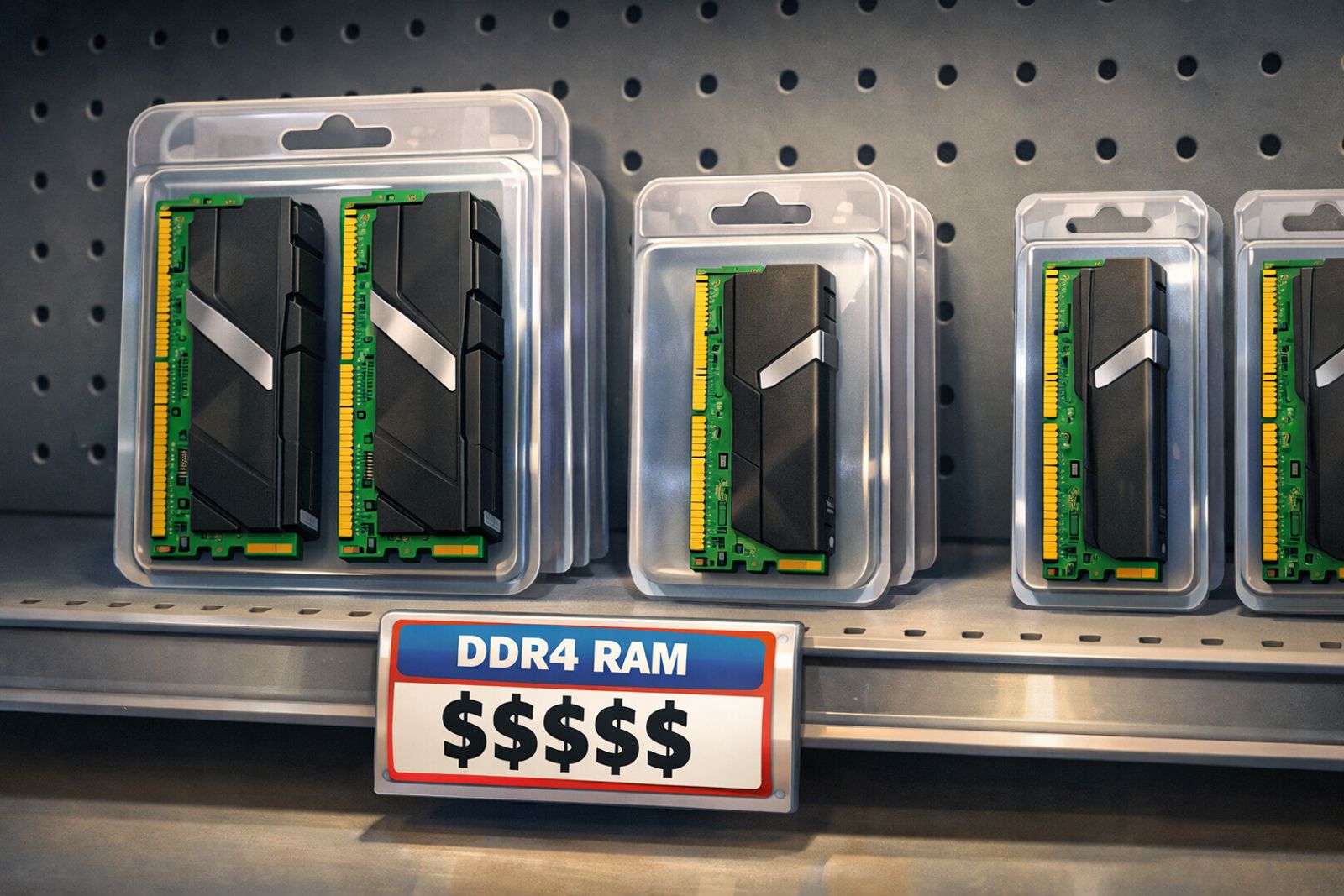
If you’re building a new PC, upgrading your desktop, or purchasing a new laptop, you’ve likely noticed one thing: memory has become very expensive. RAM prices have jumped sharply compared to just a year or two ago, and the increase isn’t slowing down.
This isn’t a simple shortage. It’s the result of long-term changes in how memory is made, who it’s made for, and how manufacturers manage supply.
AI services are consuming massive amounts of memory. These systems rely on specialized high-bandwidth memory (HBM) to train and run large models. Because HBM is far more profitable, memory manufacturers are redirecting production capacity away from traditional consumer RAM. That means fewer chips are available for the rest of us.
There are limits on raw materials. All RAM starts with advanced semiconductor wafers that are expensive and produced by only a handful of suppliers worldwide. As AI companies lock in long-term contracts, wafer availability tightens, pushing up costs for all types of memory, even before it reaches consumers.
Manufacturers are intentionally controlling supply. Memory makers are keeping production tight to avoid oversupply. This helps stabilize profits but keeps prices elevated. With all major suppliers following similar strategies, competition isn’t driving prices down. In fact, companies like Micron are exiting the consumer RAM business.
Older DDR4 memory is disappearing faster than expected. As the industry transitions to DDR5, DDR4 production is being phased out. Fewer production lines mean lower availability, which is why even older systems are seeing price increases instead of discounts.
Modern devices need more RAM. What used to be considered a pro-level amount of memory (16–32 GB) is now considered standard, adding pressure to an already tight market.
High RAM prices are expected through 2026. Industry analysts report that by the end of 2026, manufacturers will have maxed out the expansion potential of their current facilities. New factories are also being built, but large-scale relief is still years away. Short-term sales may help, but a major price drop isn’t likely soon.
There are some basic strategies that can mitigate the price increases, but they're not a panacea.
Don’t wait too long to purchase. Prices have been steadily rising month over month. If you're planning to buy, purchase ASAP.
Focus on balanced systems. More RAM isn’t always better for every workload.
Watch for special deals. Even small discounts can help in a high-price market.
Consider pre-built systems. Complete PCs and laptops typically offer better value than upgrading parts. For example, Apple's usual price gouging on memory for a new Mac is actually a steal right now. But their negotiated part prices will eventually need to be renegotiated, likely increasing costs for consumers.
RAM prices reflect a fundamental shift toward AI-driven computing, not a temporary hiccup (similar to recent GPU prices increases). While costs may eventually stabilize, buyers should plan with the assumption that memory will remain expensive. Making smart, timely purchasing decisions now can help you avoid paying even more later.
There's usually more to the story so if you have questions or comments about this post let us know!
Do you need a new software development partner for an upcoming project? We would love to work with you! From websites and mobile apps to cloud services and custom software, we can help!